
In today’s digital-first economy, enterprise organizations need more than just a visually appealing website. They require a platform that can handle scale, security, performance, integrations, and continuous growth. This is exactly where Drupal for enterprises stands out.
Enterprises across industries—from healthcare and education to finance and government—choose Drupal because it offers unmatched flexibility, enterprise-grade security, and long-term scalability. When combined with strategic Drupal web development, it becomes a powerful foundation for building robust digital ecosystems.
This guide explains why Drupal is considered a smarter web development choice for enterprises and how it supports complex business requirements without limiting innovation.
Understanding Drupal for Enterprises
Drupal is an open-source content management system (CMS) designed to support highly complex and content-rich websites. Unlike basic CMS platforms, Drupal for enterprises focuses on advanced content modeling, workflow management, and system integrations.
What makes Drupal enterprise-ready is its ability to:
Manage large volumes of content
Support multiple user roles and permissions
Scale across regions, languages, and platforms
Integrate seamlessly with third-party enterprise systems
Enterprises don’t just build websites with Drupal—they build digital platforms that grow alongside their business.
Why Enterprises Prefer Drupal Over Other CMS Platforms
Choosing a CMS is a long-term strategic decision. Enterprises prefer Drupal because it delivers flexibility without sacrificing control.
Built for Complex Business Requirements
Drupal allows organizations to create custom content types, workflows, and user permissions. This makes it ideal for enterprises that manage multiple departments, brands, or digital properties under one ecosystem.
Open-Source with Enterprise Support
Being open-source, Drupal eliminates licensing costs while offering full code ownership. At the same time, enterprises can rely on a global community and professional Drupal agencies for long-term support.
Drupal Web Development: Designed for Scalability
Handles High Traffic with Ease
Enterprise websites often experience traffic spikes during campaigns, product launches, or announcements. Drupal’s architecture supports advanced caching, CDN integration, and load balancing to ensure consistent performance.
Modular and Flexible Architecture
With thousands of modules available, Drupal web development enables enterprises to add or modify features without rebuilding the entire platform. This modularity reduces technical debt and speeds up innovation.
Enterprise-Grade Security with Drupal
Security is non-negotiable for enterprises. Drupal has a strong reputation for meeting strict security standards.
Dedicated Security Team
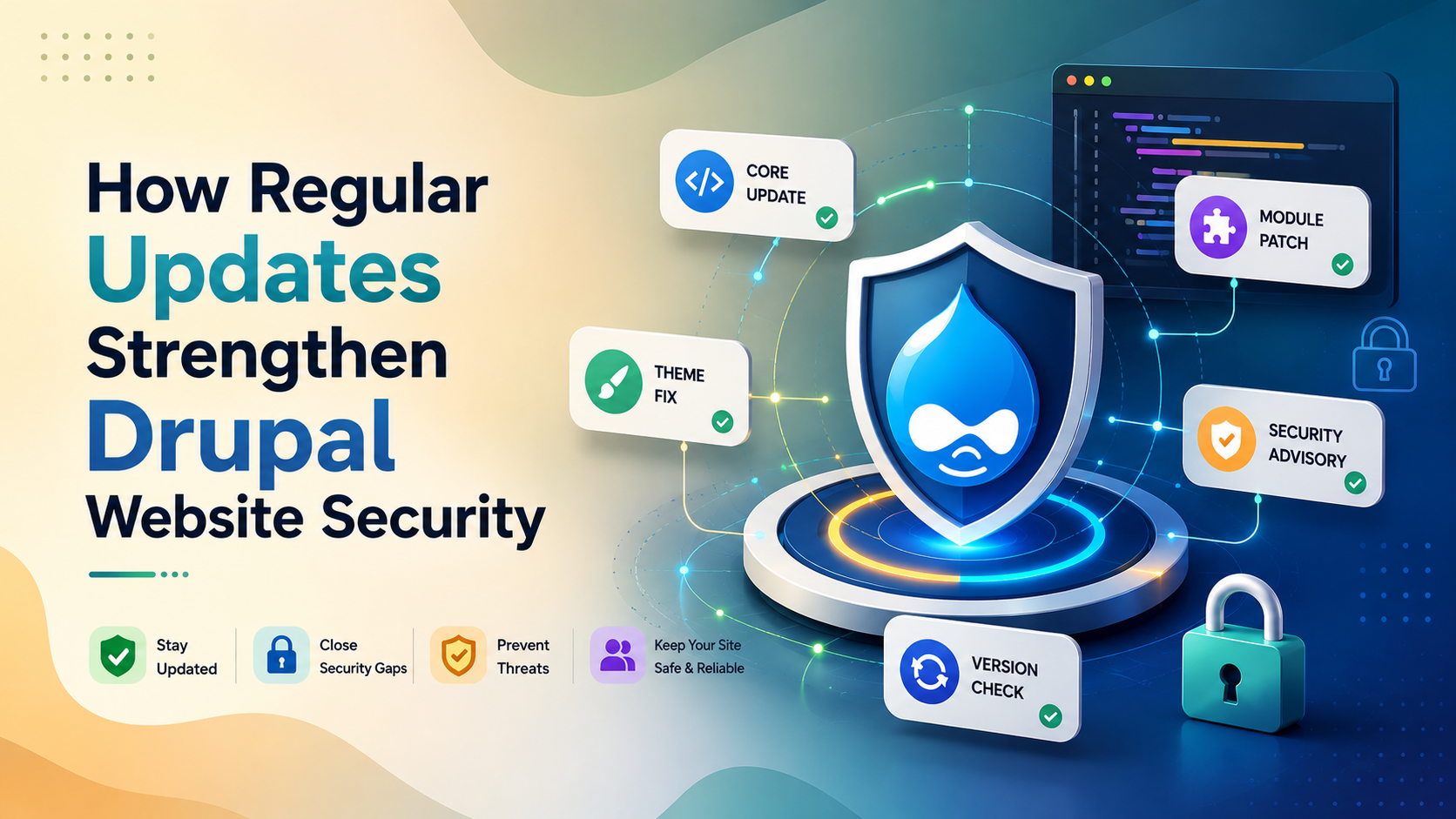
Drupal has an active security team that continuously monitors vulnerabilities and releases timely updates. This proactive approach makes Drupal for enterprises a trusted solution for industries with strict compliance needs.
Role-Based Access Control
Drupal allows granular control over user permissions. Enterprises can define who can create, edit, approve, or publish content—reducing internal risks and improving governance.
Multisite and Multilingual Capabilities
Manage Multiple Websites from One Platform
Many enterprises operate multiple brands or regional websites. Drupal’s multisite functionality allows organizations to manage all sites from a single codebase while maintaining unique branding.
Global Reach with Multilingual Support
Drupal offers built-in multilingual capabilities, enabling enterprises to deliver localized content without duplicating efforts. This is essential for global organizations targeting diverse markets.
Seamless Integration with Enterprise Systems
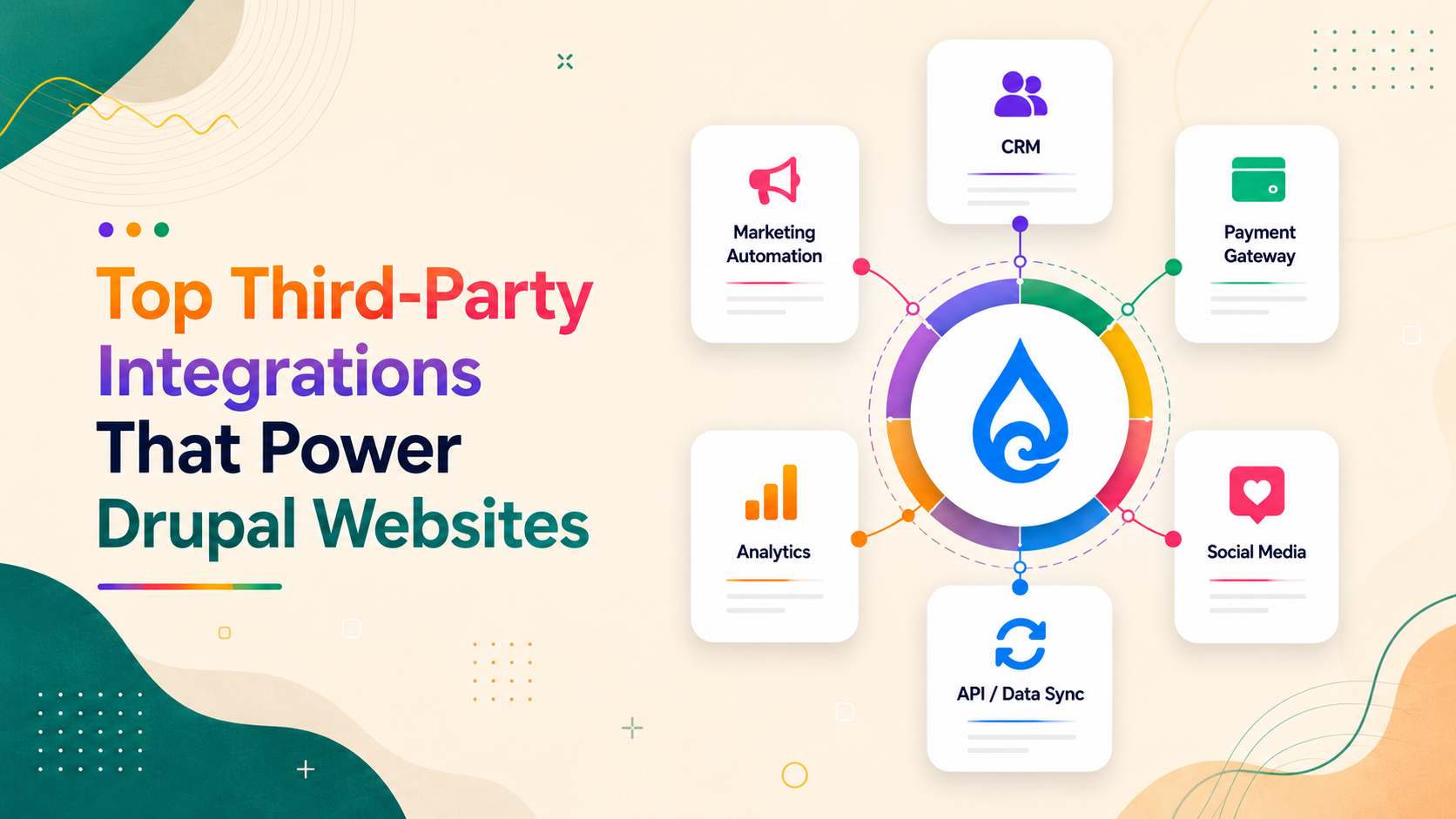
Modern enterprises rely on multiple digital tools—CRMs, ERPs, marketing automation platforms, analytics tools, and more.
Drupal web development supports seamless integration with:
Salesforce and HubSpot
SAP and Oracle
Marketing automation platforms
Headless and decoupled front-end frameworks
Drupal’s API-first approach ensures smooth data flow across systems, creating a unified digital experience.
Content Governance and Workflow Management
Advanced Publishing Workflows
Drupal supports complex editorial workflows, including content review, approval stages, and scheduled publishing. This is critical for enterprises with large content teams.
Version Control and Revisions
Every content update is tracked, allowing enterprises to restore previous versions when needed. This ensures accuracy, accountability, and compliance.
Headless and Decoupled Drupal for Enterprises
Enterprises increasingly adopt headless architectures to deliver content across multiple channels—web, mobile apps, kiosks, and IoT devices.
Drupal works exceptionally well as a headless CMS by:
Delivering content via APIs
Supporting modern front-end frameworks
Enabling omnichannel content delivery
This future-ready approach makes Drupal for enterprises a long-term digital investment.
Cost Efficiency and Long-Term ROI
While enterprise platforms often come with high licensing costs, Drupal remains cost-effective.
No Licensing Fees
Drupal’s open-source nature reduces upfront and recurring costs, allowing enterprises to invest more in customization and innovation.
Long-Term Maintainability
With proper Drupal web development, enterprises can upgrade, extend, and optimize their platforms without starting from scratch—resulting in better ROI over time.
Real-World Use Cases of Drupal for Enterprises
Enterprises use Drupal for:
Corporate websites and portals
Intranets and employee platforms
Government and public-sector websites
Educational institutions and research platforms
Healthcare and financial services portals
Its adaptability makes Drupal suitable for virtually any enterprise use case.
Future-Proofing Enterprise Digital Platforms
Drupal continuously evolves to meet modern web standards. With regular core updates, improved performance, and support for modern development practices, enterprises can stay ahead without platform limitations.
By choosing Drupal for enterprises, organizations invest in a CMS that grows with technology trends rather than becoming obsolete.
Frequently Asked Questions (FAQs)
1. Why is Drupal considered ideal for enterprises?
Drupal offers scalability, security, flexibility, and integration capabilities that meet complex enterprise needs better than many traditional CMS platforms.
2. Is Drupal suitable for large-scale web development?
Yes. Drupal web development is designed to support high-traffic, content-heavy, and multi-site enterprise platforms.
3. How secure is Drupal for enterprise websites?
Drupal has a dedicated security team, regular updates, and advanced access controls, making it one of the most secure CMS options available.
4. Can Drupal integrate with enterprise tools?
Absolutely. Drupal integrates seamlessly with CRMs, ERPs, marketing tools, and third-party systems using APIs.
5. Is Drupal cost-effective for enterprises?
Yes. With no licensing fees and long-term scalability, Drupal for enterprises delivers strong ROI compared to proprietary CMS platforms.
Final Thoughts
Choosing the right CMS is critical for enterprise success. Drupal for enterprises offers the perfect balance of flexibility, control, security, and scalability. When implemented through expert Drupal web development, it becomes a future-ready digital foundation capable of supporting evolving business goals.
For enterprises seeking a smarter, more adaptable web development choice, Drupal remains one of the most powerful platforms available today.
Related Posts
Paragraph vs Custom Paragraph in Drupal
Apr 10, 2026


Drupal vs WordPress: Best CMS Choice for 2026
Dec 09, 2025

Why Drupal Is the Best Choice for UK SMEs in 2025
Sep 05, 2025

Why UK Small Businesses Are Choosing Drupal in 2025
Sep 04, 2025

Is a Website Important in Business
Aug 26, 2025


How Microinteractions Make Your Website Feel Alive
Aug 07, 2025

Disadvantages of having a Drupal 7 Website
Mar 07, 2025
Drupal 7 vs Drupal 10: A Comprehensive Comparison
Mar 07, 2025




How to Choose the Right CMS for Your Website
Jan 06, 2025






Comments