
Drupal Security plays a critical role in protecting modern websites from cyber threats, data breaches, and service disruptions. Drupal is widely trusted by governments, enterprises, educational institutions, and healthcare organizations because of its robust framework. However, even a strong CMS can become vulnerable if security risks are ignored.
In today’s threat landscape, understanding top security risks and knowing how to address them is essential to maintain website security. This guide explains common Drupal security risks, why they occur, and—most importantly—how to eliminate them effectively while keeping your site stable, compliant, and secure.
Why Drupal Security Requires Proactive Attention
Drupal websites often handle sensitive data, high traffic, and complex user roles. These factors make them attractive targets for attackers. While Drupal core is built with security in mind, real-world risks usually arise from configuration issues, outdated components, or poor maintenance practices.
Ignoring Drupal Security can result in:
- Unauthorized access to admin panels
- Malware injections affecting SEO and reputation
- Data leaks impacting user trust
- Downtime that disrupts business operations
Proactive security management is the only way to ensure long-term protection.
Understanding the Top Security Risks in Drupal
1. Outdated Drupal Core and Modules
One of the most common security risks in Drupal is running outdated software. Security vulnerabilities are often publicly disclosed, making unpatched sites easy targets.
How to eliminate this risk:
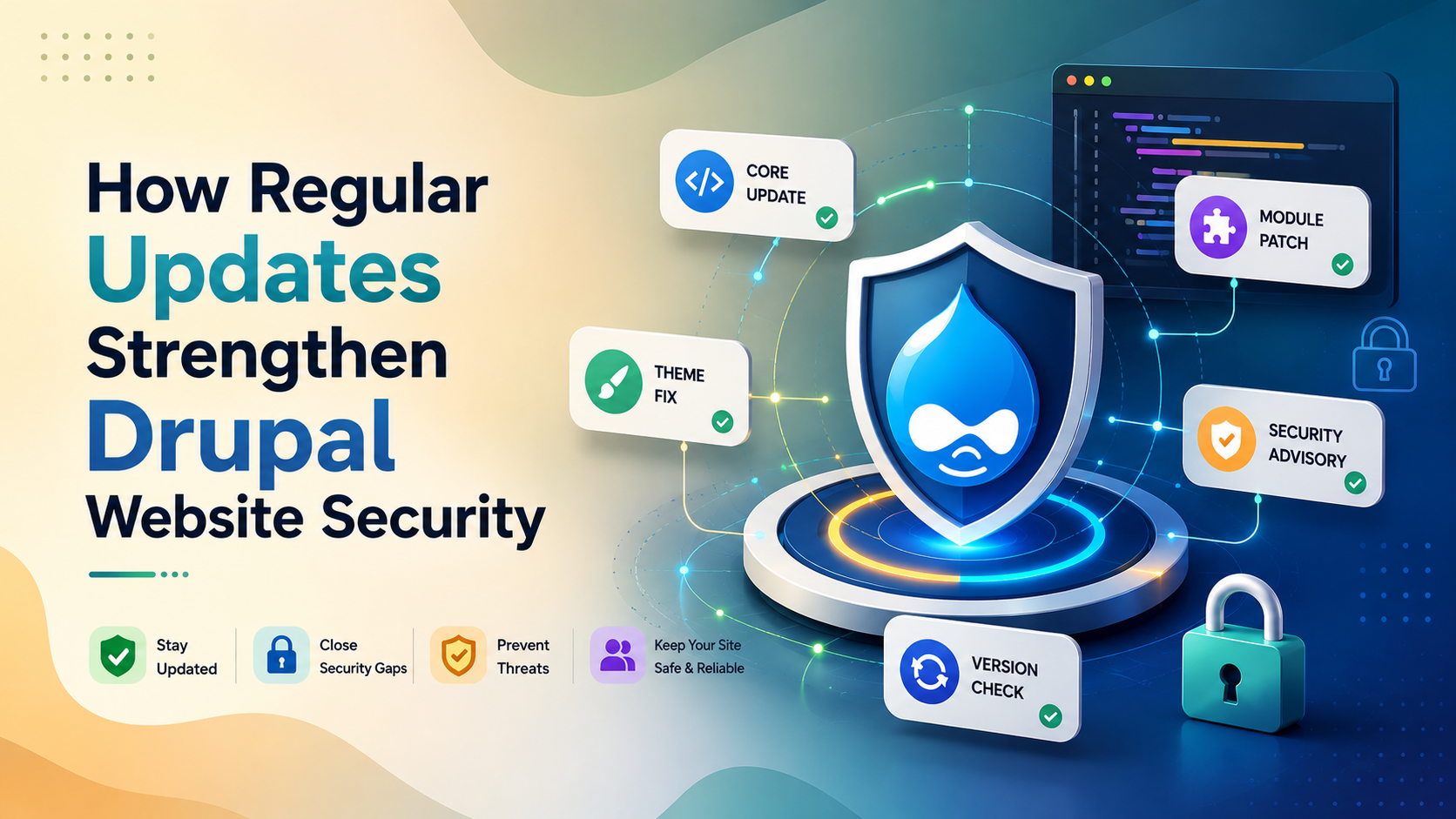
- Apply Drupal core updates immediately
- Monitor module security advisories
- Remove unused or abandoned modules
Keeping your system updated is a foundational Drupal Security practice.
2. Weak Authentication and Password Policies
Poor password practices remain a leading cause of website breaches. Admin and editor accounts with weak passwords increase exposure significantly.
Why this affects website security
- Brute-force attacks exploit weak credentials
- Shared passwords increase insider risk
- Compromised accounts lead to privilege escalation
Solution:
- Enforce strong password policies
- Enable two-factor authentication
- Limit admin access strictly
Strong authentication dramatically reduces Drupal security risks.
3. Improper User Roles and Permissions
Drupal’s flexible permission system is powerful—but dangerous when misconfigured.
Common mistakes include:
- Granting admin-level access unnecessarily
- Allowing content editors to manage modules
- Forgetting to remove access for former users
How to fix this security risk
- Follow the principle of least privilege
- Review user roles quarterly
- Audit permissions after site updates
Correct permission management strengthens overall website security.
How Configuration Issues Create Security Gaps
4. Insecure File and Directory Permissions
Incorrect file permissions can allow attackers to upload malicious scripts or modify configuration files.
Fixing this risk:
- Restrict write access to sensitive directories
- Disable PHP execution in upload folders
- Use secure hosting environments
This step is essential for organizations aiming to check website safety regularly.
5. Lack of HTTPS and Secure Headers
Without HTTPS, data transmitted between users and your Drupal site can be intercepted.
Drupal Security best practices include:
- Enforcing HTTPS across the site
- Configuring security headers (HSTS, CSP)
- Blocking mixed content issues
These measures protect user data and improve trust signals.
Application-Level Drupal Security Risks
6. Cross-Site Scripting (XSS) Vulnerabilities
XSS attacks inject malicious scripts into web pages viewed by users.
Why it matters:
- Steals session cookies
- Redirects users to malicious sites
- Damages brand credibility
How to eliminate it:
- Use Drupal’s built-in text filtering
- Avoid unsafe input handling
- Apply security updates promptly
Drupal core already mitigates many XSS risks—but only if maintained correctly.
7. SQL Injection and Data Exploitation
SQL injection occurs when attackers manipulate database queries through input fields.
How Drupal Security helps:
- Drupal’s database API prevents unsafe queries
- Core coding standards reduce exposure
Your responsibility:
- Avoid custom SQL queries
- Validate and sanitize all inputs
This protects your site from severe data-related security risks.
Operational Risks That Impact Drupal Security
8. Poor Backup and Recovery Planning
Security isn’t just about prevention—it’s also about recovery.
Without proper backups:
- Recovery from attacks becomes slow
- Data loss may be permanent
- Business continuity is threatened
Best practice:
- Schedule automated backups
- Store backups offsite
- Test recovery processes regularly
Backups are critical for maintaining Drupal Security resilience.
9. Lack of Monitoring and Activity Logs
Many website owners discover breaches weeks or months after they occur.
Why monitoring matters:
- Early detection reduces damage
- Logs help identify attack patterns
- Suspicious behavior can be blocked faster
Regular monitoring helps you check website safety and respond proactively.
Industry Use of Drupal Increases Security Responsibility
Drupal is used across industries such as government, healthcare, education, finance, and media. These sectors manage sensitive data and are subject to compliance standards.
Because of this:
- Security expectations are higher
- Audits are more frequent
- Failure carries legal and financial consequences
Implementing strong Drupal Security controls is not optional—it’s a requirement.
Best Practices to Eliminate Drupal Security Risks
A Practical Drupal Security Checklist
- Keep Drupal core and modules updated
- Enforce strong authentication policies
- Review roles and permissions regularly
- Enable HTTPS and security headers
- Monitor logs and user activity
- Schedule routine security audits
Following this checklist dramatically reduces exposure to top security risks.
How to Regularly Check Website Safety in Drupal
To maintain ongoing security:
- Subscribe to Drupal security advisories
- Run vulnerability scans periodically
- Review server and application logs
- Conduct annual penetration testing
These steps ensure continuous protection and help identify emerging security risks early.
Frequently Asked Questions (FAQ)
1. What is the biggest Drupal Security risk?
Outdated core or modules are the biggest risk, as they expose known vulnerabilities that attackers actively exploit.
2. How often should I review Drupal security?
Security reviews should be done quarterly, with immediate checks after major updates or configuration changes.
3. Can Drupal handle enterprise-level website security?
Yes. Drupal is trusted globally for high-security websites when configured and maintained properly.
4. How do I check website safety for my Drupal site?
You can check website safety by monitoring logs, running security scans, and staying updated with Drupal advisories.
5. Are security modules enough to protect Drupal?
Security modules help, but true Drupal Security requires updates, proper configuration, monitoring, and best practices.
Final Thoughts
Drupal Security is not about reacting to attacks—it’s about eliminating risks before they become threats. By understanding the most common security risks and applying proven fixes, you can protect your website, users, and business reputation.
A secure Drupal site builds trust, ensures compliance, and supports long-term growth. Invest in security today-and eliminate vulnerabilities before attackers find them.
Related Posts

Paragraph vs Custom Paragraph in Drupal
Apr 10, 2026






Drupal vs WordPress: Best CMS Choice for 2026
Dec 09, 2025

Why Drupal Is the Best Choice for UK SMEs in 2025
Sep 05, 2025

Why UK Small Businesses Are Choosing Drupal in 2025
Sep 04, 2025

Is a Website Important in Business
Aug 26, 2025



How Microinteractions Make Your Website Feel Alive
Aug 07, 2025

Disadvantages of having a Drupal 7 Website
Mar 07, 2025
Drupal 7 vs Drupal 10: A Comprehensive Comparison
Mar 07, 2025




How to Choose the Right CMS for Your Website
Jan 06, 2025






Comments