
Selecting the appropriate CMS is among the most crucial choices you'll make regarding your site. It can affect the security and performance, scaling, workflows for content, and even the long-term digital growth. With a variety of different content management systems in the market, Drupal and WordPress remain the most popular choices but they have distinct needs.
If you're thinking of launching a new website or are considering the possibility of a redesign for 2026 or beyond, this article will aid you in understanding Drupal and WordPress strengths, weaknesses and the time when Drupal is the better long-term investment.
Short Summary of Why You Should Select WordPress or Drupal?
If you're running out of time Here's a quick and easy solution:
Choose Drupal if your requirements include high-end security, complex site architectures, multilingual websites, organized content, or massive-scale digital experiences.
Choose WordPress for speedier set-up, lower upfront costs as well as simple websites and access to a myriad of plugins and themes.
Both are excellent platforms however, your decision will depend on your goals for business -not the popularity.
1. Security: is the reason Drupal is the best choice in Enterprise & Government
In terms of the security aspect, Drupal is unmatched. It is equipped with a dedicated security staff and community review processes and a core architecture that is built for high-risk environments. This is why governments and financial institutions, as well as international brands, and universities choose Drupal CMS;
Why should you choose Drupal to protect your data?
Access control is strong and users have authorizations
Standards for secure code
There are fewer vulnerabilities than WordPress
Ideal for compliance-driven websites (HIPAA GDPR, HIPAA security standards)
WordPress is secure as well However, its plugin-heavy community creates the risk. For companies where security can't be put at risk, Drupal is the best option.
2. Scalability and Performance: Drupal Dominates Large Platforms
In terms of speed and performance Drupal was designed to handle large-scale websites.
It can handle heavy traffic, massive content libraries, and complicated load conditions with no compromise to speed.
Benefits of Drupal's performance
Flexible systems for caching
Better database optimization
Large Content Handling, Dynamic
Multi-site support and the ability to build multi-domain systems
Headless CMS ready for the latest frontends
If your website is able to grow in traffic, size or complexity, Drupal is the ideal choice for you long-term.
3. Content Architecture: Drupal Offers True Flexibility
This is the place where Drupal really shines.
Drupal utilizes an organized content model that allows:
Custom content types
Custom fields
Taxonomies & data relationships
Advanced workflows for editing
Reusable content components
This is what makes Drupal perfect for businesses publishing, universities portals, and brands which are focusing on personalization.
WordPress is a great platform for websites that are marketing or blogs However, it is dependent on plugins when handling complicated content structures.
4. Developer Ecosystem and Integrations
Drupal is a flexible platform that provides unparalleled flexibility for developers working in modern, large digital ecosystems.
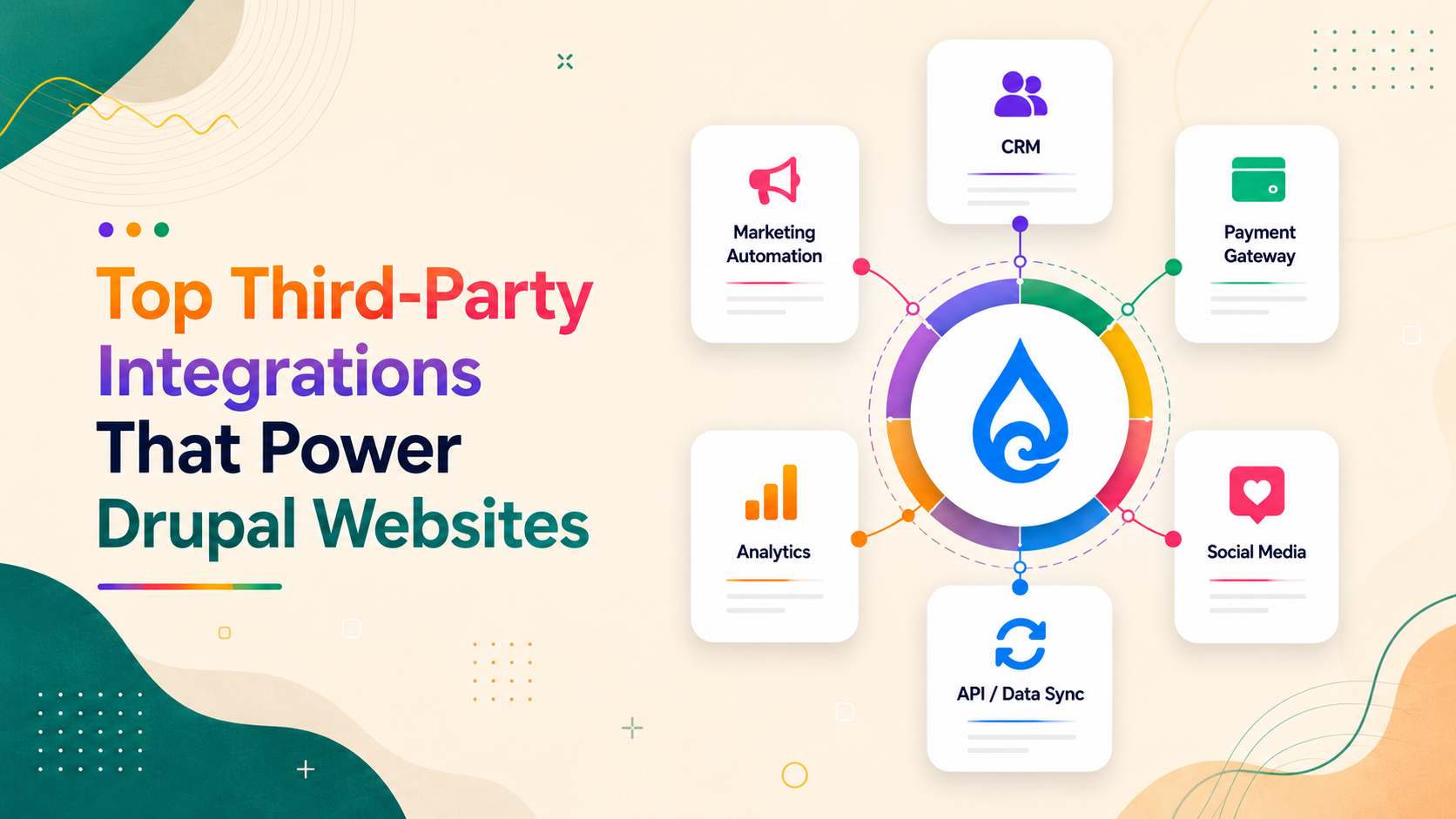
Its API-first design makes it simple to connect to:
CRM systems
Tools for marketing automation
SSO stands for Single Sign-On. (SSO)
DAM systems
ERPs
Frontend frameworks that do not require a head (React, Next.js, Vue)
If your company is looking for an open architecture, or plans to build digital experiences that span multiple channels, Drupal is the perfect base.
5. Cost and Time-to-Market: WordPress Wins for Simple Sites
It's true WordPress websites usually cost less in the beginning.
The availability of pre-made themes and plugins can help small companies start up quickly.
Drupal requires technical knowledge and therefore the initial development process takes more time and money.
However, for long-term, large-scale digital properties, numerous organizations are finding Drupal to be more economical because it needs:
fewer plugin dependencies
more rarely redesigned
stronger long-term security
lower maintenance risk
6. Why Should You Consider Drupal?
Here's a basic checklist that will help you decide.
Select Drupal If Your Requirement Is:
Enterprise security
Multilingual capability
Multi-site management
Structured Content Architecture
Personalized user experiences
Scalability to the highest degree
Environments that are heavily integrated
A headless or decoupled CMSSelect WordPress If:
Your site is easy
You require a faster time to launch
You would rather not use any technology for managing content
You're looking for a cost-effective marketing site
7. Why Drupal is Continuing to be the Most Effective CMS in 2026
Drupal is a top choice for companies due to its superior performance in four key areas:
Security
Scalability
Flexibility
Future-proofed architecture
It meets the requirements of growing businesses that are global, as well as companies that heavily rely upon digital media.
If your digital plan includes personalization, multichannel delivery API integrations or large-scale content, Drupal is more than only an option but the right option.
Conclusion: Drupal vs. WordPress -- Pick based on Long-Term goals
The ideal CMS isn't about popularity. It's about the platform that can allow for your future digital growth.
WordPress is an effective tool for marketing websites as well as small-scale businesses.
Drupal is, however, designed for business-level requirements with a complex architecture, high security and long-term capacity.
If you're looking to build a site that is able to grow, integrate, and grow in time, Drupal is regarded as the top CMS for developing websites by 2026.
Related Posts
Paragraph vs Custom Paragraph in Drupal
Apr 10, 2026








Why Drupal Is the Best Choice for UK SMEs in 2025
Sep 05, 2025
Why UK Small Businesses Are Choosing Drupal in 2025
Sep 04, 2025

Is a Website Important in Business
Aug 26, 2025


How Microinteractions Make Your Website Feel Alive
Aug 07, 2025


Disadvantages of having a Drupal 7 Website
Mar 07, 2025
Drupal 7 vs Drupal 10: A Comprehensive Comparison
Mar 07, 2025




How to Choose the Right CMS for Your Website
Jan 06, 2025






Comments