
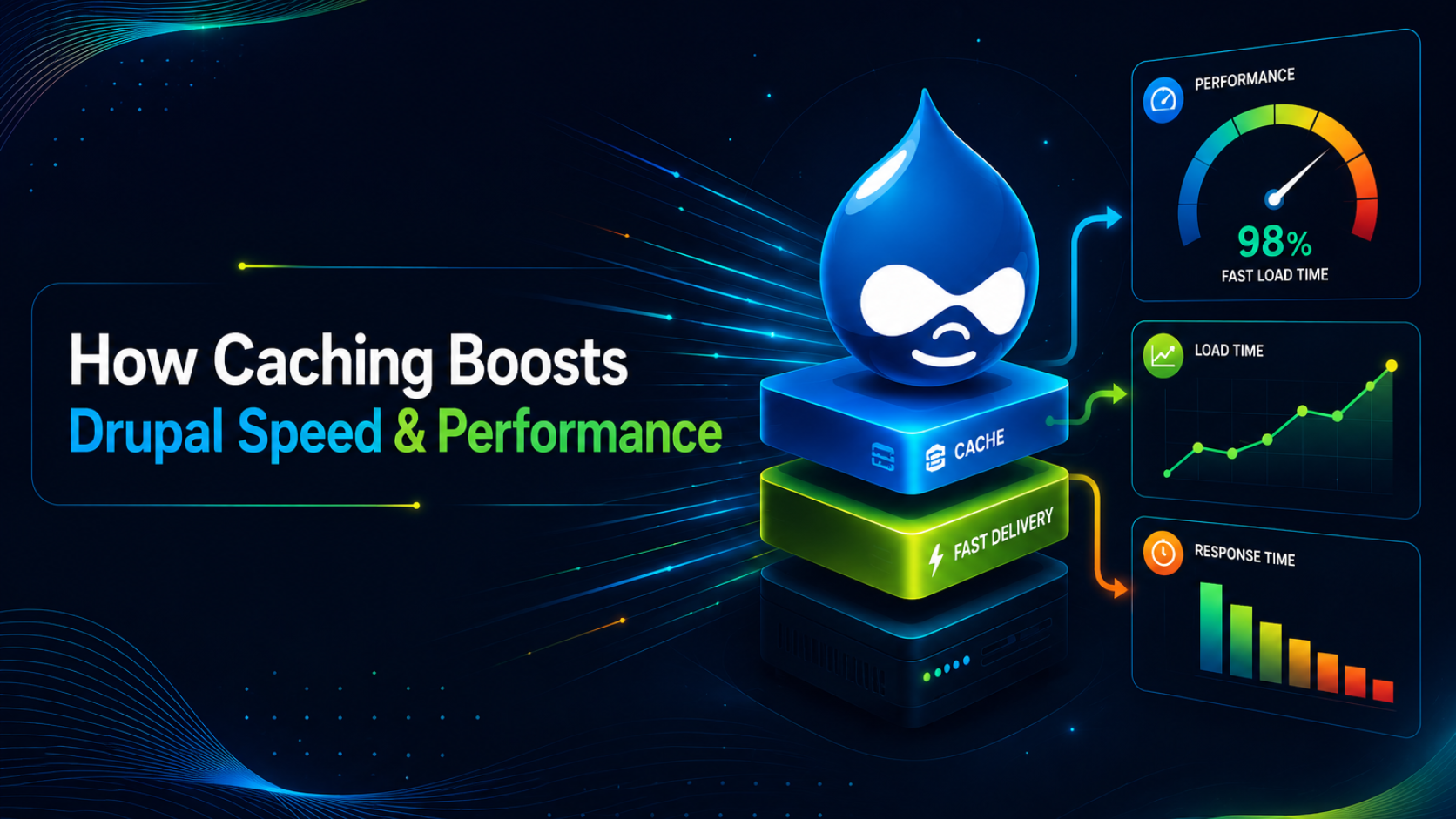
A fast website is no longer optional. For any Drupal website, speed directly affects user experience, search rankings, and conversions . One of the biggest advantages of Drupal is its flexibility, powered by powerful Drupal Modules that help improve caching, loading time, and overall site performance.
In this blog, we explore the top Drupal Modules that boost website performance, explain how they work, and show how they improve website speed, scalability, and stability.
Why Website Performance Matters for a Drupal Website
Website performance plays a critical role in SEO and user satisfaction. Visitors expect pages to load quickly. If your site is slow, users leave—and search engines notice.
For a Drupal website, performance optimization is especially important because:
Drupal is content-rich and modular
Poor configuration can slow down page rendering
Large databases and images affect loading time
By using the right Drupal Modules , you can improve site performance, reduce server load, and deliver content faster. This becomes even more important during website migration, when performance issues often appear after moving to a new server or Drupal version.
Top Drupal Modules to Improve Site Performance
1. Redis – High-Speed Caching for Drupal Websites
Redis is a high-performance in-memory caching system that replaces traditional database caching in Drupal. It stores cached data in memory, making retrieval much faster.
How Redis Improves Site Performance
Reduces database queries
Speeds up page loading
Handles high traffic efficiently
Best for: Large Drupal websites, enterprise platforms, and traffic-heavy sites.
2. Memcache – Faster Data Access
Memcache is another popular caching solution used to improve website speed. It stores frequently accessed data in memory instead of querying the database repeatedly.
Key Benefits of Memcache
Faster backend response time
Reduced server load
Better scalability
Best for: Multi-server Drupal environments and complex websites.
3. Purge – Smart Cache Invalidation
Clearing cache incorrectly can slow down your site. The Purge module allows Drupal to clear only updated content instead of flushing the entire cache.
Why Purge Is Important
- Keeps cached pages fresh
- Prevents unnecessary cache clears
- Improves frontend performance
Best for: Content-heavy Drupal websites with frequent updates.
4. WebP – Image Optimization for Better Website Speed
Images often account for most of a page’s size. The WebP module converts images into a modern format that loads faster while maintaining quality.
Advantages of Using WebP
Smaller image file sizes
- Faster page load times
- Improved mobile performance
Best for: Media-rich Drupal websites and image-heavy pages.
5. Advanced CSS/JS Aggregation (AdvAgg)
AdvAgg improves how Drupal handles CSS and JavaScript files. It minifies and aggregates assets to reduce the number of requests sent to the server.
How AdvAgg Improves Performance
Reduces HTTP requests
- Improves frontend rendering
- Boosts Core Web Vitals scores
Best for: Drupal websites with complex themes and scripts.
6. Ultimate Cron – Efficient Background Processing
Cron jobs handle background tasks such as cache cleanup and data updates. Poorly scheduled cron jobs can impact site performance.
Benefits of Ultimate Cron
Better task scheduling
- Reduced server strain
- Improved backend efficiency
Best for: Drupal websites with automated workflows and integrations.
7. Node Revision Delete – Database Optimization
Drupal stores content revisions by default. Over time, these revisions increase database size and slow down queries.
Why Node Revision Delete Matters
Cleans unused content revisions
- Improves database performance
- Enhances long-term site stability
Best for: Older Drupal websites with frequent content edits.
Additional Drupal Performance Enhancements
Drupal Core Caching
Drupal includes built-in caching modules such as Internal Page Cache and Dynamic Page Cache. These should always be enabled for better site performance.
Content Delivery Network (CDN)
A CDN delivers static assets from servers closer to users, reducing latency and improving global load times.
Best Practices to Maximize Drupal Site Performance
To get the best results from these Drupal Modules, follow these proven best practices:
- Enable only required modules
- Optimize images along with WebP conversion
- Use browser, server, and CDN caching
- Regularly clean unused content and revisions
- Test performance after every website migration
Working with an experienced Drupal development company can help ensure correct configuration and long-term performance gains .
FAQ: Drupal Modules and Website Performance
What are Drupal Modules?
Drupal Modules are extensions that add functionality to a Drupal website. Performance modules help improve speed, caching, and resource efficiency.
Do Drupal Modules really improve site performance?
Yes. When configured correctly, performance-focused Drupal Modules significantly improve website speed and user experience.
Are these modules useful after website migration?
Yes. After a website migration, these modules help resolve speed issues caused by server changes or configuration differences.
Can beginners use Drupal performance modules?
Basic modules are easy to install, but advanced optimization should be tested in a staging environment to avoid conflicts.
Should I hire a Drupal development company?
For large or business-critical websites, a Drupal development company ensures proper setup, testing, and ongoing optimization.
Conclusion
Improving performance is essential for every Drupal website. With the right Drupal Modules, you can boost site performance, enhance website speed, and deliver a better user experience. Whether you’re optimizing an existing site or planning a website migration,performance-focused Drupal modules help your site stay fast, scalable, and future-ready.
Related Posts
Paragraph vs Custom Paragraph in Drupal
Apr 10, 2026







Drupal vs WordPress: Best CMS Choice for 2026
Dec 09, 2025

Why Drupal Is the Best Choice for UK SMEs in 2025
Sep 05, 2025

Why UK Small Businesses Are Choosing Drupal in 2025
Sep 04, 2025

Is a Website Important in Business
Aug 26, 2025



How Microinteractions Make Your Website Feel Alive
Aug 07, 2025


Disadvantages of having a Drupal 7 Website
Mar 07, 2025
Drupal 7 vs Drupal 10: A Comprehensive Comparison
Mar 07, 2025



How to Choose the Right CMS for Your Website
Jan 06, 2025







Comments